

In This Article
Let’s get one thing out of the way. No sauna, lamp, or glowing gadget will erase your laugh lines. Anyone who promises that is selling you a story, not a skin routine.

But here’s the twist. A real, slow-burn body of research suggests that certain wavelengths of light can nudge your skin cells to behave a little more like their younger selves. That’s the promise behind a near infrared sauna for skin and wrinkles: warmth you can feel, plus invisible light that reaches below the surface.
The catch? The market is a tangle of marketing. “Infrared sauna” can mean a cabin lined with carbon heaters that emit almost no near infrared at all. Or it can mean a cabin with red and near-infrared LEDs bolted on. Or a heated blanket that’s essentially a cozy sweat bag. These are different tools doing different jobs.
So this guide does the sorting for you. We’ll decode photobiomodulation, translate the wavelength nanometers on spec sheets into plain English, and look at what the evidence says about collagen production. Then we’ll rank seven real products you can find on Amazon, with honest notes about which ones actually deliver near-infrared light and which are far-infrared heat only. You’ll also get a clear plan for using one safely.
Think of it as a knowledgeable friend leaning over your shoulder while you shop. 🔥
Quick Comparison: 7 Near Infrared Sauna Options at a Glance
Before the deep dive, here’s the bird’s-eye view. Pay attention to the “Light Type” column. It’s the single most important thing separating a true near infrared sauna for skin and wrinkles from a regular sweat session.
| Product | Format | Light Type | Price Tier | Best For |
|---|---|---|---|---|
| Real Relax Full Spectrum Sauna | 1-person cabin | 660 nm + 850 nm LEDs plus heaters | Cabin tier | Skin-first buyers with space |
| Therasage Thera360Plus | Portable sit-in sauna | Full spectrum with red light | Upper-mid | Small homes wanting full spectrum |
| OUTEXER Far Infrared Sauna | Hemlock cabin | Far infrared carbon panels, color lights | Cabin tier | Heat and relaxation first |
| HigherDOSE Infrared Sauna Blanket | Blanket | Far infrared heat | Premium blanket | Brand-conscious buyers |
| LifePro RejuvaWrap | Blanket | Far infrared heat | Budget-friendly | Value and clear controls |
| Happy Sol Far Infrared Sauna Blanket | Blanket | Far infrared heat | Mid blanket | Reading or scrolling mid-session |
| Healix Infrared Sauna Blanket | Blanket | Far infrared heat | Budget-friendly | Anyone who hates zippers |
Looking at the table, only the Real Relax Full Spectrum Sauna and the Therasage Thera360Plus advertise near-infrared or red-light output, which makes them the strongest fits for skin-focused goals. The blankets and the OUTEXER Far Infrared Sauna are far-infrared heat tools, so they suit circulation and relaxation better than light-driven skin work. If wrinkles are your main target, the price jump to a light-equipped unit is easier to justify than it first appears.
💬 Just one click — help others make better buying decisions too!😊
Top 7 Near Infrared Sauna Picks for Skin and Wrinkles: Expert Analysis
A quick note on method. Detailed Amazon review text can’t be reliably verified from here, so I lean on published specs and on how editorial roundups describe each product. Where review data is thin, I say so instead of papering over it. Prices stay in broad tiers because they shift constantly, so check current price before you buy.
1. Real Relax Full Spectrum Sauna — best overall for light-driven skin goals
This is the pick for readers who want a near infrared sauna for skin and wrinkles rather than just a warm box. Editorial roundups list its red-light output at 660 nm and 850 nm, the two wavelengths most associated with skin-focused photobiomodulation.
The cabin also uses seven heating panels and about 1290W of power. Reviewers in those roundups note it climbs to roughly 113°F in about 25 minutes, which is gentle by traditional-sauna standards. In practice, that means you can stay comfortable long enough to get a full light session without feeling cooked.
Here’s the analytical take. The 660 nm band is the one with the strongest evidence for fine lines and texture, while 850 nm reaches deeper. Having both in one cabin covers the bases. The trade-off is footprint and cost, because this is furniture, not a gadget.
Aggregated review sentiment: roundups rate it highly overall, but I couldn’t verify individual Amazon reviews, so treat star ratings as directional. Assembly effort and the one-person size are the themes to watch.
Pros:
- ✅ Dual red and near-infrared wavelengths on the spec sheet
- ✅ Moderate heat suits longer light exposure
- ✅ Seven panels give wide body coverage
Cons:
- ❌ Needs floor space and a dedicated outlet
- ❌ LED output specifics aren’t clearly published
Price tier: cabin-class, so check current price. The value verdict is strong if skin is your priority and weak if you only want to sweat.

2. Therasage Thera360Plus — full-spectrum sauna that fits in a small home
Sitting somewhere between a blanket and a cabin, the Therasage Thera360Plus is a portable sit-in sauna with a bamboo build and full-spectrum infrared with red light. The maker lists heat up to about 170°F and positions it as low in EMF, ELF, and RF exposure.
Spec translation: “full spectrum” should mean near, mid, and far infrared together, and that matters because near infrared is the band that travels deepest into skin tissue. A portable design means you can stash it in a closet when guests visit, which is the real-world advantage over a cabin.
My honest analysis: the sit-in format limits airflow and legroom, so it’s best for people comfortable in tight spaces. One roundup puts its rating around 4.3 out of 5 and describes the heat performance as outstanding, but those are editorial impressions rather than a verified Amazon review sample.
If you don’t specifically need full spectrum or bamboo, the same roundup suggests cheaper blankets deliver similar relaxation. That’s a useful reality check. You pay extra here for the light spectrum, not for more sweat.
Pros:
- ✅ Full spectrum with red light advertised
- ✅ Portable and storable
- ✅ Low-EMF claims from the manufacturer
Cons:
- ❌ Sit-in design feels confined
- ❌ Costs more than any blanket
Price tier: upper-mid, so check current price. Good value for apartment dwellers who want near infrared without a cabin.
3. OUTEXER Far Infrared Sauna — the relaxation cabin with mood lighting
Here’s an honest curveball. The OUTEXER Far Infrared Sauna is exactly what it says: far infrared. It uses six carbon panels, a Canadian hemlock build, and a seven-color light feature.
Why include it? Because many shoppers searching for a near infrared sauna for skin and wrinkles end up buying a far-infrared cabin without realizing the difference. Far infrared heats you gently and boosts that post-sweat glow, but it isn’t the wavelength band studied for collagen signaling. The color lights are ambiance, not therapy.
Where it earns its spot is comfort. Hemlock is a pleasant, low-odor wood, and carbon panels deliver even, low-glare heat. If your real goal is stress relief and a skin-flushing warm-up, it’s a lovely tool. If wrinkles are the mission, pair it with a dedicated red or near-infrared panel.
Aggregated review sentiment: roundups present it as a solid mid-cabin option, but I couldn’t confirm detailed Amazon review themes, so I won’t invent any.
Pros:
- ✅ Even carbon-panel heat
- ✅ Hemlock construction feels premium
- ✅ Color lighting for relaxation
Cons:
- ❌ No near-infrared output advertised
- ❌ Takes real space
Price tier: cabin-class, so check current price. Value is fair as a sauna, poor as a skin-light device.
4. HigherDOSE Infrared Sauna Blanket — the premium blanket with the best-known name
The HigherDOSE Infrared Sauna Blanket is the one you’ve probably seen in your feed. It offers a crystal-infused lining, low-EMF positioning, nine temperature levels, and an industrial zipper.
Be clear on what it is. It’s far-infrared heat, not a near infrared sauna for skin and wrinkles. What it gives your skin is warmth, sweat, and relaxation, which can temporarily plump and flush the complexion, though that’s not the same as light-triggered collagen signaling.
Worth knowing: one editorial roundup lists a 4.2-star Amazon rating, and another editor’s pick designation. The same roundup flags that insert towels often cost extra and that it isn’t the best value for casual users. That’s the real trade-off. You’re partly paying for brand polish.
Where it shines is comfort and build. Nine heat levels let you ease in, which matters if you’re heat-sensitive.
Pros:
- ✅ Nine adjustable temperature levels
- ✅ Low-EMF positioning
- ✅ Sturdy zipper and premium feel
Cons:
- ❌ Far infrared only, no near-infrared light
- ❌ Accessories can add cost
Price tier: premium blanket, so check current price. Value is modest unless you specifically want the brand.
5. LifePro RejuvaWrap — best value blanket with straightforward controls
The LifePro RejuvaWrap keeps winning “best value” mentions in roundups, and it’s easy to see why. It offers nine heat levels spanning about 95-176°F, low-EMF carbon fiber heating, auto shut-off, and a 60-minute timer.
Again, this is far-infrared warmth. For skin and wrinkles, think of it as a relaxation and circulation tool, not a photobiomodulation device. The honest case for buying it: it’s an inexpensive way to find out whether you enjoy a regular heat habit before investing in a light-equipped cabin.
One roundup rates its controls and value around 4.5 out of 5, and another suggests the LifePro or the Healix delivers nearly the same relaxation as pricier options. That tracks with the spec sheets. Heat is heat.
What the spec sheet won’t tell you is how it handles hot, sticky sessions. Blankets trap moisture, so you’ll want a towel layer and a quick wipe-down after each use.
Pros:
- ✅ Clear, wide range of heat levels
- ✅ Auto shut-off and timer for safety
- ✅ Budget-friendly entry point
Cons:
- ❌ No near-infrared or red light
- ❌ Needs wiping down after each session
Price tier: budget-friendly, so check current price. Excellent value as a heat-habit starter.

6. Happy Sol Far Infrared Sauna Blanket — arm holes that make sessions bearable
The Happy Sol Far Infrared Sauna Blanket has one feature that sounds trivial and isn’t: arm holes. Roundups credit it as best for usability, since you can hold a book, phone, or remote without breaking the heat seal.
It’s far infrared and low-EMF in positioning. So again, it supports relaxation and a post-session glow rather than the near-infrared skin work. But if you’re someone who gets bored after ten minutes, arm holes change compliance, and compliance is the real driver of any routine.
One roundup lists a rating near 4.3 out of 5, with arm-hole usability as the standout. I couldn’t verify written Amazon reviews, so consider the number directional.
My analysis: the best product is the one you’ll actually use three times a week. If sitting still feels like torture, this design earns its keep.
Pros:
- ✅ Arm holes make sessions practical
- ✅ Low-EMF positioning
- ✅ Comfortable for longer routines
Cons:
- ❌ Far infrared only
- ❌ Arm openings let a little heat escape
Price tier: mid blanket, so check current price. Fair value if comfort drives your routine.
7. Healix Infrared Sauna Blanket — hook-and-loop closure for zipper haters
Rounding out the list, the Healix Infrared Sauna Blanket offers a 77-176°F range, carbon-fiber heating, and a hook-and-loop closure instead of a zipper. Some people find zippers scratchy or claustrophobic, and this solves that.
Like the others in blanket-land, it’s far infrared. The practical upside is its low starting temperature of 77°F, which allows very gentle warm-ups for anyone easing in.
Editorial roundups suggest it matches pricier blankets for core relaxation benefits. I couldn’t verify detailed Amazon review themes, so I’ll skip invented praise or complaints. What I can say from the specs is that the wide range makes it friendly for beginners.
Use it as a cozy wind-down tool, and let a proper red or near-infrared device handle the wrinkle-targeting work.
Pros:
- ✅ Very low starting temperature for beginners
- ✅ Zipper-free hook-and-loop closure
- ✅ Carbon-fiber heating with a wide range
Cons:
- ❌ No near-infrared output
- ❌ Closure may loosen over time
Price tier: budget-friendly, so check current price. Good value as a gentle entry point.
What Is Near Infrared Sauna for Skin and Wrinkles?
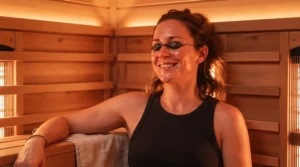
A near infrared sauna for skin and wrinkles is a heated enclosure or device that emits near-infrared light, typically in the 700 to 1,400 nanometer range, often alongside red light and far-infrared heat. The goal is to deliver low-level light that skin cells absorb, supporting collagen signaling, texture, and a smoother-looking complexion over repeated sessions.
That’s the clean definition. Here’s the plain-English layer on top.
Regular far-infrared saunas mainly warm your tissue. Near-infrared light behaves differently. It isn’t felt as intense heat, and it travels deeper into the skin. Many “infrared saunas” never emit it at all, which is why the spec sheet matters more than the product photo.
Think of a sauna as a delivery truck. Far infrared is the cargo of heat. Near infrared and red light are a separate cargo, light that your cells actually respond to. The best setups carry both, and honest brands tell you which is which. You can read more about how infrared heating works in this overview of the infrared sauna, but keep in mind that a “full spectrum” label still deserves a closer look at the actual hardware. 🔍
Photobiomodulation Explained: How Light Talks to Your Skin Cells
Photobiomodulation, often shortened to PBM, is the science behind every light-based skin claim. It describes low-level, non-heating light that changes how cells behave, and it used to go by the name low-level laser therapy.
A comprehensive dermatology-focused narrative review describes PBM as using red light from 620-700 nm and near-infrared from 700-1,440 nm for applications ranging from wound healing to skin rejuvenation. That’s the foundation for everything on this page.
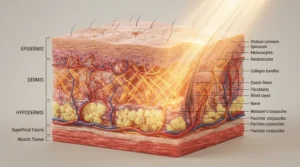
The proposed mechanism goes like this. Light is absorbed by a mitochondrial enzyme called cytochrome c oxidase. That nudge increases cellular energy output, and fibroblasts, the cells that make collagen and elastin, respond by working harder. Think of it as turning up the dimmer on a factory floor, not flipping on a bulldozer.
Here’s the part many articles skip. Evidence quality varies. Lab studies on cells are encouraging, human trials are often small, and long-term data is still building. An expert quoted in a recent consumer-facing report put it bluntly: red light is likely the better bet for fine lines and texture, while near infrared may be better for goals like hair. That’s a useful reality check for anyone chasing a near infrared sauna for skin and wrinkles specifically.
Wavelength Nanometers Decoded: What 660, 850, and 1,050 Really Mean
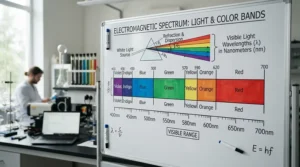
Spec sheets love throwing numbers around. Wavelength nanometers sound technical, but the logic is simple: shorter wavelengths stay shallow, longer ones go deeper.
- 630-660 nm (red): Absorbed mostly in the epidermis and upper dermis. This is the most-studied band for texture, collagen, and fine lines.
- 810-850 nm (near infrared): Reaches deeper dermis and underlying tissue. Often discussed for recovery and deeper remodeling.
- 700-1,400 nm (halogen-style near infrared): A broader band produced by halogen and quartz heaters rather than LEDs.
- 3,000 nm and up (far infrared): Mostly felt as heat, working through a different mechanism than PBM.
Translation for shoppers: a product listing “660 nm + 850 nm” is advertising the two best-studied PBM bands. A product that just says “infrared” could mean far infrared only.
Also check intensity. Wavelength tells you what color of light, but irradiance and session length tell you how much. Reputable PBM reviews stress verifying true on-skin dose, because excessive dosing can backfire. If a seller won’t publish output numbers, treat the claims with healthy suspicion. Wavelength nanometers are the headline, but dose is the story.
Collagen Production: What the Research Actually Shows
Here’s the big question for anyone shopping for near infrared sauna for collagen support: does light really change collagen production?
The strongest human evidence I found is a randomized, controlled trial of 136 volunteers using polychromatic red and near-infrared light. Participants were treated twice a week, at 611-650 nm or 570-850 nm, for 30 sessions. Researchers used blinded photo evaluation, ultrasound collagen density measurements, and profilometry to measure roughness.
The treated groups showed significantly better skin complexion, lower roughness, and higher measured collagen density compared with controls. That’s genuinely encouraging.
Now the plot twist. The authors concluded that the broadband polychromatic approach showed no advantage over red-light-only treatment. In other words, adding near infrared didn’t clearly beat plain red. So for wrinkles, a sauna that includes red wavelengths around 630-660 nm likely matters more than one with near infrared alone.
Smaller studies reported reductions in crow’s feet and neck wrinkles after several weeks of red-light sessions, but samples were around twenty people, so treat them as hints, not guarantees. For near infrared sauna for collagen support, the realistic expectation is gradual, modest improvements in texture and firmness over months. Not a facelift. Not a miracle. A slow-and-steady nudge. 🌱
Red Light Sauna for Skin Tone: Glow, Evenness, and Realistic Expectations
If your goal is brighter, more even color, a red light sauna for skin tone deserves a closer look. The same controlled trial above reported better skin complexion and skin feeling in treated groups, which is the closest published language to “tone.”
Here’s the practical reading. Red wavelengths around 630-660 nm are studied for supporting skin repair and calming irritation. Over several weeks, users commonly aim for a smoother surface and a more even look. Heat adds a short-term bonus: a flushed, post-session glow driven by blood flow, not by lasting change.
Be careful with expectations. Light-based treatment hasn’t been shown to erase deep pigmentation, melasma, or sun spots on its own. If those are your concerns, a dermatologist visit beats any home device. And if you’re prone to pigment changes, test any new routine on a small area first.
A smart way to think about it: a red light sauna for skin tone is a maintenance tool, not a correction tool. It supports healthy-looking skin the way regular sleep does. Pair it with daily sunscreen, which remains the most proven anti-aging habit around. ☀️
How to Choose a Near Infrared Sauna for Skin and Wrinkles
Choosing wisely is the real skill here. Use these steps in order.
- Check the spectrum first. Look for explicit near-infrared or red wavelengths listed in nanometers. “Infrared” alone usually signals far-infrared heat.
- Prioritize red light. Since the trial evidence leans on red wavelengths, make sure 630-660 nm is present, not just 850 nm.
- Ask for output data. Reputable makers publish irradiance. If they won’t, the dose is a mystery.
- Match format to your space. Cabins deliver coverage but need room, while portable units and blankets fit apartments.
- Look for safety certifications and controls. Auto shut-off, timers, and clear temperature ranges protect you.
- Consider comfort. Heat tolerance and claustrophobia decide whether you’ll actually use it.
- Budget for consistency. The best device is the one you use two or three times a week for months.
Notice how heat features rank below light features in a skin-focused purchase. That’s the reverse of how most sauna marketing is written.
✨ Ready to Pick Your Setup?
🔍 Take your skin routine to the next level with these carefully selected options. Click on any highlighted product to check current pricing and availability. A thoughtful choice now will help you build a calm, consistent routine you can stick with!
Near Infrared Sauna vs Far Infrared Sauna vs Traditional Sauna
These three get lumped together, but they work differently. Here’s a side-by-side look.
| Feature | Near Infrared / Full Spectrum | Far Infrared Only | Traditional Sauna |
|---|---|---|---|
| Typical wavelength | 700-1,400 nm plus red | 3,000 nm and above | None, heats the air |
| Primary effect | Light absorption in tissue | Radiant heat | Hot air and steam |
| Skin-focused evidence | Strongest (red and NIR) | Limited | Limited |
| Typical temperature | Moderate | Moderate | High |
| Best For | Skin-focused buyers with Real Relax Full Spectrum Sauna or Therasage Thera360Plus | Relaxation with the LifePro RejuvaWrap or OUTEXER Far Infrared Sauna | Social, high-heat sessions |
Reading this table, the light-based column is the only one tied to skin-specific research, while far-infrared and traditional options are better framed as wellness and recovery tools. If wrinkles are your target, a unit with both heat and red or near-infrared light gives you the broadest toolkit. If you simply love sweating, a LifePro RejuvaWrap or Happy Sol Far Infrared Sauna Blanket costs far less and does that job well.
How to Use a Near Infrared Sauna: A Practical Routine You Can Actually Follow
Amazon listings don’t teach technique, so here’s a setup guide.
Start gentle. For your first week, run sessions of 10-15 minutes at the low end of the temperature range. Your body needs to learn the routine.
Prep your skin. Remove makeup, sunscreen, and heavy creams first. Light needs to reach skin, not a layer of product. Use a clean towel to wipe sweat as you go.
Hydrate on both ends. Drink water before and after. Dehydration makes you dizzy and makes skin look dull, which defeats the purpose.
Build frequency, not intensity. The controlled trial used twice-weekly sessions across 30 sessions, which is roughly seven months. Consistency over months mattered more than any single long session.
Protect your eyes. Near-infrared light can be hard on the eyes at high intensity. Follow the manufacturer’s guidance on eyewear and avoid staring at LED panels.
Finish smart. After a session, apply a gentle moisturizer with ceramides and wear sunscreen the next day. Heat can leave skin feeling sensitized.
Track results. Take a photo in the same lighting every four weeks. Your mirror lies. A timeline doesn’t.
First-month mistakes to dodge: skipping water, overheating on day one, and quitting at week three when nothing seems different. Skin remodeling is slow. Patience is part of the protocol. ⏳
Real-World Scenarios: Which Pick Fits Your Life?
Specs mean little without context. Here are three realistic profiles.
The apartment renter in her 30s. She has a small bedroom, a modest budget, and early fine lines around the eyes. A Therasage Thera360Plus stores away and adds full-spectrum light, so it protects her space while serving her goal. If the budget is tight, a LifePro RejuvaWrap gets the heat habit started while she saves.
The homeowner in his 50s with a spare room. He wants a proper routine, three sessions a week, and has the floor space. The Real Relax Full Spectrum Sauna offers dual red and near-infrared wavelengths and enough heat to relax muscles after workouts. His consistency will determine results far more than the brand.
The restless reader who hates sitting still. Sessions bore her within ten minutes. A Happy Sol Far Infrared Sauna Blanket with arm holes keeps her engaged, and she’s far more likely to stick with it than with a stricter setup. For her, the heat habit comes first, and a separate red-light panel can handle the skin-light work later.
Notice the pattern. Format, space, and habit drive the decision as much as raw specs. Buy for the person you are, not the person you plan to become next month.
Common Mistakes When Buying a Near Infrared Sauna
Plenty of smart shoppers trip over the same few hurdles.
Assuming “infrared” means near infrared. Most carbon-panel saunas emit far infrared. The OUTEXER Far Infrared Sauna is a good example: lovely for heat, silent on near-infrared light.
Chasing the biggest wattage. Higher power means more heat, not necessarily better skin light. For skin goals, spectrum and dose matter more.
Ignoring red wavelengths. Given the trial finding that broadband light didn’t beat red-only, skipping 630-660 nm is a classic oversight.
Buying on star ratings alone. Roundup ratings and Amazon scores are directional, not clinical. A 4.2 on a blanket doesn’t tell you anything about skin outcomes.
Overheating to “speed things up.” Heat is not a shortcut. Excess temperature raises dizziness and dehydration risks without improving the light dose.
Skipping sunscreen. Photoaging accounts for a huge share of visible aging. If you use a near infrared sauna for skin and wrinkles but skip daily SPF, you’re bailing water while the tap runs.
Expecting overnight change. Controlled trials ran for months. Plan for months.
Long-Term Cost and Value: Is It Worth It?
Let’s talk total cost of ownership, because the sticker price is only chapter one.
| Tier | Typical Examples | Upfront Cost | Ongoing Cost | Best For |
|---|---|---|---|---|
| Budget blanket | LifePro RejuvaWrap, Healix Infrared Sauna Blanket | Lowest | Electricity, replacement towels | Habit testers |
| Premium blanket | HigherDOSE Infrared Sauna Blanket | Moderate-high | Accessories | Brand-focused buyers |
| Portable full spectrum | Therasage Thera360Plus | Upper-mid | Electricity | Small spaces |
| Light-equipped cabin | Real Relax Full Spectrum Sauna | Highest | Electricity, space | Daily skin routines |
Here’s the value logic. Spread the cost of a cabin over five years of three weekly sessions and the per-session price falls dramatically. A blanket you stop using after a month costs infinitely more per session.
Hidden costs deserve a mention: electricity, replacement parts, towel layers, and the space a cabin occupies. And remember that HigherDOSE Infrared Sauna Blanket roundups flag extra costs for accessories.
The smartest approach for undecided buyers is a ladder. Start with an inexpensive blanket to test the habit, then upgrade to a light-equipped option once the routine sticks. That way you spend big only when you’ve proven you’ll use it.
Safety First: Who Should Skip or Check With a Doctor
A safe routine is the only routine worth keeping. A few guardrails matter.
Pregnancy. Most experts advise avoiding infrared saunas during pregnancy, particularly in the first trimester, because of overheating concerns. Always get your OB-GYN’s approval first.
Heart and blood pressure issues. Heat and standing up quickly can drop blood pressure. If you have cardiovascular conditions, get medical clearance.
Photosensitivity. Certain medications and conditions increase light sensitivity. The controlled trial excluded people with histories of photosensitivity or recent photosensitizing medications, which is a useful clue about who should be cautious.
Eye protection. Near-infrared light at high intensity may stress the eyes. Follow device guidance on eyewear.
Skin cancer history. A focused systematic review looked at the oncologic safety of photobiomodulation for skin rejuvenation. If you have a personal history of skin cancer, ask your dermatologist before starting.
Also respect the basics: hydrate, stop if you feel dizzy, and never use a device with a damaged cord. Blankets in particular deserve a look at recall notices and clear instructions before purchase. Light therapy is gentle, but it isn’t a free pass to ignore common sense. ⚠️
Frequently Asked Questions About Near Infrared Sauna for Skin and Wrinkles
❓ How often should I use a near infrared sauna for wrinkles?
❓ Does a near infrared sauna really boost collagen?
❓ Is red light better than near infrared for fine lines?
❓ Are sauna blankets the same as a near infrared sauna?
❓ Can I use a near infrared sauna every day?
Conclusion: Choose Light First, Heat Second
Here’s the bottom line, straight and unvarnished. A near infrared sauna for skin and wrinkles can support collagen production, texture, and a healthier-looking complexion, but it works slowly, and the best evidence leans on red light as much as near infrared. Heat is a pleasant bonus, not the engine.
If skin is your priority, aim for a product that lists red and near-infrared wavelength nanometers clearly. The Real Relax Full Spectrum Sauna and the Therasage Thera360Plus are the two options here that advertise it. If you’re testing the waters, a LifePro RejuvaWrap or Healix Infrared Sauna Blanket gives you a low-risk way to build the habit, while the HigherDOSE Infrared Sauna Blanket, Happy Sol Far Infrared Sauna Blanket, and OUTEXER Far Infrared Sauna suit heat and comfort first.
Stay realistic, protect your skin with daily sunscreen, and give any routine a few months before judging it. Consistency beats intensity every single time.
✨ Ready to Glow Smarter? 🔍 Browse the picks above, check current pricing and availability, and choose the setup that fits your space and your habits. Your future skin will thank you for starting today!
Recommended for You
- Infrared Sauna Panels for DIY Closet Conversion: 7 Best Picks 2026
- Full Spectrum Infrared Sauna for Muscle Recovery: 7 Best Picks 2026
- Two Person Far Infrared Sauna for Apartment Living: 7 Best Picks 2026
Disclaimer: This article contains affiliate links. As an Amazon Associate, I earn from qualifying purchases. If you purchase products through these links, we may earn a small commission at no additional cost to you.
✨ Found this helpful? Share it with your friends! 💬🤗
