
In This Article
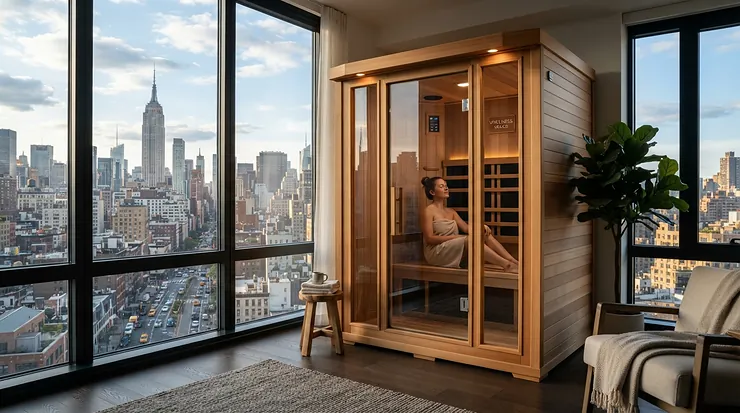
A two person far infrared sauna for apartment living is a plug-in wooden cabin that warms your body directly with infrared panels instead of heating the air with a stove. It runs on a standard 120V outlet, needs no plumbing or venting, and seats two adults in roughly the footprint of a large wardrobe.
That last part is the whole appeal. Traditional Finnish-style heaters usually demand 240V hardwiring, which is a non-starter in most rentals. Far infrared cabins skip the electrician, the steam, and the landlord drama. Sunday night, you’re sweating beside your partner with a podcast playing, and nobody has drilled a single hole in the wall.
A reality check before the shopping spree, though. A peer-reviewed review of far-infrared sauna research found that manufacturers’ health claims outrun the published evidence, and the studies behind them are small. So this guide treats a sauna as what it is: a deeply relaxing, warm, screen-free ritual with some promising but unproven extras. It is not a miracle appliance.
We compared seven real cabins on the things that matter when you live in 700 square feet: electrical draw, footprint, weight, heater type, and shielding. Prices below are ranges only, so check current pricing before you buy.
Quick Comparison: 7 Cabins at a Glance
| Product | Heater Type | Size Note | Power | Price Range | Best For |
|---|---|---|---|---|---|
| JNH Lifestyles Joyous | 7 carbon panels | 47.3 x 39.5 x 75 in | 120V plug-in | Roughly $1,100-$1,900 | Budget-first couples |
| Dynamic Saunas Andora | 6 low EMF carbon panels | 43 x 37 in interior | 1750W, 15A plug | Around $2,150-$2,400 | Red light at a mid price |
| Golden Designs Maxxus Seattle | 6 carbon panels incl. floor | 50 x 42 x 75 in | 110V/15A | Mid-tier; check current price | Cold-feet households |
| Dynamic Saunas Venice | 6 low EMF carbon panels | 50 x 42 x 77 in | 1700W, dedicated 15A | Mid-tier; check current price | Homes with a dedicated outlet |
| KUNSANA Ceramic Infrared Sauna | 6 ceramic tubes | Check listing | 1840W | Check current price | Fast warm-up seekers |
| OUTEXER 2-3 Person Corner | Low EMF far infrared panels (per listing) | Corner footprint | 2100W, 20A | Check current price | Spare-corner rooms |
| Heavenly Heat 2-Person | Far infrared panels | 47.2 x 41.3 x 75 in | 120V; 20A recommended | Mid-$5,000s and up | Buyers who plan to keep it for years |
The table shows a clear split. The JNH Lifestyles Joyous is the value play, while the Heavenly Heat 2-Person sits at the premium end. The two Dynamic cabins draw close to the limit of a 15A circuit, so a dedicated outlet matters more than the sticker price. The KUNSANA Ceramic Infrared Sauna is the only one here built on ceramic tubes, which changes warm-up time and shielding questions we unpack later.
💬 Just one click — help others make better buying decisions too!😊
Top 7 Two Person Far Infrared Sauna Picks for Apartment Living: Expert Analysis
Spec sheets are cheap to write and expensive to misread. Each pick below translates the numbers into what they mean in a real apartment, based on published specs and aggregated review sentiment. We did not personally test these cabins.
1. JNH Lifestyles Joyous — best price-to-features ratio
The JNH Lifestyles Joyous earns its spot by packing seven carbon panels into a modest cabin. It measures about 47.3 x 39.5 x 75 inches and weighs roughly 250 pounds. That footprint slides into most bedroom corners, and the weight is manageable for an upper-floor unit. Seven panels (versus six on many rivals) should mean fewer cold patches on your shoulders and calves. Listings cite a 135°F maximum and Bluetooth audio with chromotherapy lights.
On paper this is the “sensible friend” of the group. If you want a first sauna without a car-payment price tag, the spec-to-dollar ratio is hard to beat. Retailer-listing ratings sat around 4.3 across more than 1,400 ratings at research time. Roundups praise easy assembly (one write-up cites about 90 minutes with a helper) and flag a standard warranty plus basic audio as the trade-offs.
Pros:
- ✅ Seven carbon panels for even coverage
- ✅ Compact footprint suits tight bedrooms
- ✅ Plug-in 120V setup, no electrician
Cons:
- ❌ Standard warranty, not an extended one
- ❌ Audio system is basic
Price range: roughly $1,100-$1,900 depending on retailer, so check the current price. For tight budgets, it is the value leader.

2. Dynamic Saunas Andora — red light therapy at a mid-range price
The Dynamic Saunas Andora pairs six low EMF carbon panels with red light therapy, Bluetooth, and an MP3 aux input. Its 43 x 37 inch interior is genuinely a two-seater, but a snug one. Garage Gym Reviews’ tester gave it a 4.2 and openly questioned whether it seats two comfortably. Take that seriously if you and your partner are tall.
The bigger apartment story is power. At 1750W, it pulls roughly 14.6 amps, which is nearly the entire capacity of a 15A circuit. Translation: give it its own outlet and don’t run the microwave at the same time. Some roundups flag the need for a dedicated circuit and a longer build. Others call assembly easy, so expect variation by builder skill.
Listing ratings hover near 4.6 across roughly 500 ratings, and the 135°F maximum suits gentle, longer sessions.
Pros:
- ✅ Red light therapy included at mid-range cost
- ✅ Low EMF carbon panels throughout
- ✅ Canadian hemlock with Bluetooth audio
Cons:
- ❌ Draws near the limit of a 15A circuit
- ❌ Interior feels snug for tall adults
Price range: about $2,150-$2,400 across sources, so confirm current pricing. It is good value if you want red light and have a clean outlet.
3. Golden Designs Maxxus Seattle — heated floor for cold feet
The Golden Designs Maxxus Seattle adds a detail most cabins skip: a heater under your feet. Six carbon panels include a floor panel, and the listing highlights feet reflexology heating. In practice that means your toes warm up with the rest of you, which matters in a drafty prewar flat. Listings show a 110V/15A plug-and-play setup, tempered glass door, two full-length side windows, and an interior control panel.
Footprint is the compromise. At roughly 50 x 42 x 75 inches, it’s wider than the JNH Lifestyles Joyous, so measure twice. Listed weights range from about 230 to 250 pounds depending on the version. Manufacturer copy claims carbon panels outperform ceramic tubes, which is marketing, not independent testing. I couldn’t verify a deep pool of owner reviews at research time, so weigh this one mostly on specs.
The glass side windows also help if sealed boxes make you claustrophobic.
Pros:
- ✅ Floor panel warms feet and calves
- ✅ Glass windows make the cabin feel open
- ✅ Plug-and-play 110V/15A setup
Cons:
- ❌ Wider footprint than budget rivals
- ❌ Listings vary, so confirm the model year
Price range: mid-tier, with no verified current figure, so check the current price. It’s strong value for anyone who hates cold feet.
4. Dynamic Saunas Venice — widest panel coverage, built for a dedicated outlet
The Dynamic Saunas Venice spreads six low EMF carbon panels around you: two on the rear wall, one on each side, one under the bench, and one on the floor. That layout wraps heat around the whole body instead of blasting your back. Listings show 1700W on 110-120V and call for a dedicated 15A breaker and outlet.
The exterior is about 50 x 42 x 77 inches and the cabin weighs roughly 375 pounds. Those two numbers are the apartment gotchas. A 77-inch height can clash with low ceilings or soffits, and 375 pounds is a meaningful point load on an upper floor. Ask your landlord about floor ratings, and spread the load with a plywood sheet or rubber mat.
Owner-review depth was thin in my research, so I’d lean on specs and brand support here.
Pros:
- ✅ Six panels, including bench and floor
- ✅ Even wraparound heat for two
- ✅ Low EMF carbon design
Cons:
- ❌ Heavy at about 375 pounds
- ❌ Needs a dedicated outlet and breaker
Price range: mid-tier, so check the current price. It’s worth it if your space has the height, floor strength, and outlet to match.
5. KUNSANA Ceramic Infrared Sauna — the ceramic option for fast warm-up
The KUNSANA Ceramic Infrared Sauna is the odd one out, built on six ceramic tubes rather than carbon panels. It also includes red light therapy and a glass front with a granite-style backdrop. Ceramic elements typically heat quickly and emit a broader mix of infrared wavelengths. That’s handy if you’re impatient and want to step in sooner.
The catch is power and shielding. At 1840W, the draw works out to about 15.3 amps at 120V, which suggests a 20A circuit. Verify the plug type on the listing before you order. Ceramic designs also tend to run hotter at the surface and can produce more magnetic field than carbon unless shielded. I could not find independent EMF measurements for this model, so ask the seller for third-party test results before buying.
It appears in couples roundups, but I couldn’t verify detailed owner sentiment.
Pros:
- ✅ Ceramic tubes warm up quickly
- ✅ Red light therapy included
- ✅ Glass front opens up the room
Cons:
- ❌ 1840W likely needs a 20A circuit
- ❌ Independent EMF figures are hard to find
Price range: unverified, so check the current price. It suits the warm-up-impatient, provided the shielding proof checks out.

6. OUTEXER 2-3 Person Corner — fits the awkward corner nobody uses
The OUTEXER 2-3 Person Corner turns dead space into a sauna. Its corner design tucks into the spot where a spare chair or a sad plant lives. Listings show 2100W, a 120V 20A plug, Canadian hemlock, a bronze tempered glass door, and a temperature range of roughly 145-149°F.
That higher ceiling temperature runs hotter than the 135°F ceilings on several rivals, which suits people who find gentle heat underwhelming. Meanwhile, 2100W is about 17.5 amps, so it needs that 20A circuit. Don’t plug it into a bedroom outlet shared with a space heater.
“2-3 person” also means roomier seating, which couples who like personal space may appreciate. Several 2026 roundups name it a top couples pick. I couldn’t confirm independent owner reviews, and the “low EMF” claim deserves a request for test data.
Pros:
- ✅ Corner layout reclaims unused floor space
- ✅ Hotter 145-149°F range available
- ✅ Roomier than strict two-seaters
Cons:
- ❌ 2100W needs a 20A circuit
- ❌ Heavy power draw for a small unit
Price range: no verified figure, so check the current price. It fits couples with a spare corner and a robust outlet.
7. Heavenly Heat 2-Person — premium build with a 10-year warranty
The Heavenly Heat 2-Person is the splurge. It measures 47.2 x 41.3 x 75 inches, weighs about 320 pounds, and uses non-resinous Canadian hemlock built without glues, plywood, or stains. Marketing cites low EMF, ELF, and RF levels, and Garage Gym Reviews lists a 10-year warranty and a 165°F maximum. For an apartment, that low-odor wood story matters, because new cabins can smell sharply of adhesive in a closed room.
Testers reported 25-30 minutes to reach maximum temperature, so plan your evening accordingly. The outlet is the same story as the others: 120V on a 15A circuit works, but 20A is recommended. The site scored it 4.1 overall, with 4 of 5 stars for construction and for price-to-value. Testers noted it is not the pick if red light therapy is a priority.
Pros:
- ✅ Ten-year warranty signals long-term confidence
- ✅ Glue-free, non-resinous hemlock build
- ✅ Heats up to 165°F
Cons:
- ❌ Costs two to four times the entry cabins
- ❌ No built-in red light therapy
Price range: one review listed $5,600 and another listing showed higher, so expect the mid-$5,000s and up. It is the best fit if you’re planning to keep it for a decade.
Apartment Setup Guide: Power, Floors, and Your First 30 Days
Most first-month mistakes are boring ones, which is good news, because boring problems have boring fixes.
Before delivery, measure everything. Cabins ship as flat panels, but your door frames, hairpin hallway turns, and elevator still matter. Confirm ceiling height too, since several cabins stand 75-77 inches tall.
Map your circuit. Wattage divided by 120 gives amps, so 1750W is about 14.6A. Electrical codes generally treat continuous loads as safe up to roughly 80% of a breaker’s rating, which means a 15A circuit comfortably carries about 12A. Anything near the top of the range deserves its own outlet. I’m not an electrician, so ask your building manager or a licensed pro to check your wiring.
Protect the floor. Use a plywood sheet or a thick rubber mat under the cabin, and keep the bottom edge off carpet fibers that trap moisture.
Build the ritual slowly. Start with short sessions at lower temperatures and rehydrate before and after. A small study found far-infrared bathing was a comfortable, very light load on the body after training. Three to four sessions weekly is a commonly cited sweet spot, though your doctor knows your heart better than any blog does.
Which Sauna Fits Which Couple? Three Real-World Scenarios
Profiles beat spec-sheet staring. Here are three hypothetical households and the cabins that suit them.
The renter on a budget. Picture two grad students in a one-bedroom with a dedicated bedroom outlet and a $2,000 ceiling. The JNH Lifestyles Joyous fits the corner, runs on a plug, and leaves money for towels and a good water bottle. The risk is warranty length, so register it right away.
The cold-feet couple in an older building. Drafty floors, hardwood, high ceilings. The Golden Designs Maxxus Seattle‘s floor heater is the standout, and its glass windows keep the room from feeling like a box. Confirm that 50 inches of width fits your layout.
The homeowners with a spare corner and a 20A circuit. The OUTEXER 2-3 Person Corner uses the corner and gives each person some elbow room. If long-term reliability matters more than cost, upgrade to the Heavenly Heat 2-Person.
In each case, outlet capacity and floor space decided the winner before wood type or Bluetooth ever mattered.
Common Apartment Sauna Problems and How to Fix Them
Problem: The breaker trips mid-session. Something else shares the circuit. Move the sauna to a dedicated outlet, and never use a cheap extension cord for a heater drawing 14-17 amps.
Problem: The cabin feels too hot in summer. One retailer guide notes that running a sauna can noticeably warm a small apartment. Run it in the evening, open a window afterward, and use a fan.
Problem: The cabin smells strongly of new wood. Air it out with the door open before first use. Glue-free builds like the Heavenly Heat 2-Person are marketed partly on this point.
Problem: Bluetooth music thumps through the wall. Keep volume modest, and consider headphones for late sessions. Sound travels easily through shared walls.
Problem: The lease ends. Choose a cabin you can disassemble. Panel-built cabins like the JNH Lifestyles Joyous come apart without permanent changes. Save the original packaging footprint, and photograph the assembly steps before taking it apart.
How to Choose a Two Person Far Infrared Sauna for Apartment Living
Follow these seven steps in order, because step one can eliminate half the list.
- Check your electrical capacity. Divide wattage by 120 to get amps, and decide whether you have a free 15A or 20A circuit.
- Measure the space. Include ceiling height, door clearance, and the path from the front door to the room.
- Check floor loading. Cabins range from roughly 230 to 375 pounds, plus two adults.
- Pick the heater type. Carbon panels and ceramic heating elements behave differently on warm-up and surface temperature.
- Ask for EMF test data. Request third-party measurements taken at the seat, not marketing adjectives.
- Judge the seating honestly. A two-seater for a couple with broad shoulders can feel snug.
- Read the warranty. Warranties span a standard term up to a decade, and the length tells you how confident the maker is.
Compact Far Infrared Sauna for Small Spaces: What Your Floor Plan Can Actually Handle
A compact far infrared sauna for small spaces rarely fails on heat. It fails on geometry. Most cabins in this guide measure close to 47-50 inches wide and 40-42 inches deep, so you need roughly a 5 x 4 foot clear zone plus space to swing the door open.
Height is the sleeper issue. Several cabins stand 75-77 inches tall, and a ceiling fan, sloped attic ceiling, or low soffit can ruin the plan. Sketch the cabin on the floor with painter’s tape. If you feel the tape stealing your only walkway, believe your instincts.
Corner designs such as the OUTEXER 2-3 Person Corner are the exception because they trade a long wall for a diagonal. If you truly lack space, a one-person model or a blanket-style product is more honest than cramming in a cabin that blocks the bathroom door. For two bodies in a compact far infrared sauna for small spaces, though, a 47-inch wide cabin like the JNH Lifestyles Joyous is about as tight as comfort allows.
2 Person Far Infrared Sauna for Couples: Sharing the Bench Without the Elbow Wars
A 2 person far infrared sauna for couples sounds romantic until you notice that the bench is about 40 inches wide. That’s two adults sitting thigh to thigh, which is lovely in January and sticky in July.
Check the interior, not just the exterior. The Dynamic Saunas Andora lists a 43 x 37 inch interior, and an independent tester questioned whether it truly seats two comfortably. A wider cabin like the Golden Designs Maxxus Seattle gives a bit more room, while the OUTEXER 2-3 Person Corner is the more generous option.
Mismatched heat tolerance is the other couple’s problem. Far infrared cabins run cooler than traditional saunas, mostly in the 120-150°F range, so a lower setting suits the partner who hates heat while the other just stays longer. A 2 person far infrared sauna for couples also works for staggered solo sessions, which is where the real daily value lives. Put the schedule in the shared calendar, not on a sticky note.
Carbon Heater Panels: The Quiet Workhorse Inside Most Compact Cabins
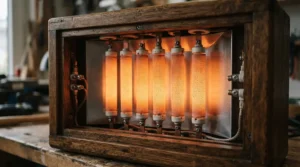
Carbon heater panels are thin laminated sheets of carbon fiber backed with a reflective layer that pushes infrared energy toward your body. Because the panel is large and flat, it heats gently across a wide area instead of glowing from a few hot points. Retailer guides commonly describe carbon surfaces running around 140-200°F, which feels like a warm hug rather than a heat lamp.
Five of the seven cabins in this guide use carbon heater panels, and that isn’t coincidence. Panel count and placement matter more than raw wattage. The Dynamic Saunas Venice places panels on the rear, sides, bench, and floor, while the JNH Lifestyles Joyous squeezes in seven. More coverage generally means fewer hot spots.
The trade-off is patience. Carbon heater panels typically need 15-30 minutes to reach full output, so pre-heat while you change. Retailer sources also claim carbon lasts longer than ceramic, with lifespans of 10-15 years or more. Treat that as a manufacturer-reported figure, and let the warranty length confirm it.
Low EMF Shielding: What the Numbers Mean and What to Ask Before You Buy
Every electric heater emits some extremely low frequency electromagnetic fields. Low EMF shielding means the manufacturer has designed the wiring, panel construction, and grounding to reduce those fields at the seating position. Ceramic or carbon alone doesn’t guarantee it.
Marketing numbers are a mess. One brand’s page claims regular carbon heaters hit 70-100 mG measured directly on the heater, while other retailers say well-built carbon cabins measure 0.5-3 mG at the seat. Both can be “true” if the measurement distance differs. Many sellers cite 3 mG as a benchmark, and one guide suggests looking for electric-field levels around 200mV or lower. Another summary of World Health Organization work says consumer-level ELF fields haven’t shown an established health risk.
So what should you do? Ask for third-party test results measured at head, torso, and feet positions. Treat low EMF shielding as a verification checkbox rather than a headline. If a seller dodges the question, that tells you something. The precautionary approach is cheap insurance for daily users, but it shouldn’t override outlet capacity or fit.
Ceramic Heating Elements vs Carbon: An Honest Comparison
Ceramic heating elements are electrically heated rods or tubes that emit a mix of near, mid, and far infrared. Carbon panels emit longer-wave, gentler heat across a bigger surface. Both work, and the right pick depends on your habits.
| Feature | Carbon Heater Panels | Ceramic Heating Elements |
|---|---|---|
| Warm-up (retailer reports) | About 15-30 minutes | About 5-15 minutes |
| Surface temperature | Roughly 140-200°F | Roughly 300-400°F |
| EMF (retailer reports) | Often 0.5-3 mG at seat | Often 5-15 mG |
| Heat feel | Even and gentle | Intense and focused |
| Best For | Daily, long sessions | Short, hot sessions |
Those figures come from sellers, so treat them as directional rather than gospel. The pattern is consistent, though: carbon favors comfort and daily use, while ceramic favors speed. The KUNSANA Ceramic Infrared Sauna is the ceramic outlier among our picks, and it gives you fast warm-up but demands extra scrutiny on shielding. If you’re the “hop in for twenty minutes before dinner” type, ceramic may suit you. If you want long, lazy evenings, carbon wins.
Features That Actually Matter (And Those That Don’t)
Worth caring about:
- Outlet fit. A cabin that trips your breaker is a very expensive wooden closet.
- Panel placement. Heat reaching your lower back and calves matters more than total wattage.
- Warranty length. Ten years on the Heavenly Heat 2-Person says something a spec sheet can’t.
- Verified EMF data. Ask for it in writing.
Nice to have:
- Red light therapy. The Dynamic Saunas Andora and KUNSANA Ceramic Infrared Sauna include it. Evidence for home red light benefits is thinner than the marketing suggests, so don’t pay a steep premium for it.
- Heated floor. Great for cold feet, as on the Golden Designs Maxxus Seattle.
Mostly decoration:
- Chromotherapy lights. They look pretty, but I wouldn’t pay extra for them.
- Premium audio. Your phone speaker or headphones can do the job.
- “Emissivity” claims. One retailer guide notes that nearly all modern heaters already exceed 90%, so it’s not a differentiator.
Long-Term Cost & Maintenance
The purchase price is only the opening bid. Electricity is surprisingly small. A 1750W cabin running 30 minutes uses about 0.875 kWh, and at an illustrative $0.17 per kWh that’s roughly 15 cents per session. Three sessions a week comes to about $23 a year. Your local rate will differ.
Maintenance is mostly wiping down the bench, airing the cabin, and occasionally sanding stained wood. Heaters eventually age, and sellers cite carbon lifespans of 10-15 years or more, which you should treat as a manufacturer-reported figure.
| Option | Upfront Cost | Ongoing Cost | Best For |
|---|---|---|---|
| Home cabin such as JNH Lifestyles Joyous | Roughly $1,100-$1,900 | Pennies per session | Frequent users |
| Premium cabin such as Heavenly Heat 2-Person | Mid-$5,000s and up | Pennies per session | Long-term owners |
| Gym or spa sauna access | Monthly membership | Recurring fees | Occasional users |
The math favors a cabin if you’d use it two or three times weekly for years. If you’d go twice a month, a membership likely wins. A mid-tier cabin like the Dynamic Saunas Andora pays off fastest for committed couples, mostly because the second person is free.
Safety, Regulations, and Who Should Skip It
Far infrared cabins run cooler than traditional saunas, but heat is heat. A widely cited 2018 review in Mayo Clinic Proceedings discusses sauna safety and notes that several conditions need a clinician’s guidance, including unstable cardiovascular disease, severe aortic stenosis, and recent heart attack. Most of that long-term research is on traditional Finnish saunas, not infrared cabins.
Talk to your doctor first if you have heart or blood-pressure problems, are pregnant, take medications that affect sweating or heat tolerance, or live with multiple sclerosis or epilepsy. Skip sessions when you’re ill, dehydrated, or have had alcohol.
Practical rules for two people: start with short sessions, drink water before and after, and leave immediately if either of you feels dizzy, nauseated, or has chest pain. Respect the manufacturer’s weight limits, and keep the cabin away from curtains and clutter. For apartment dwellers, also check your lease for restrictions on installing electrical appliances.
✨ Don’t Miss These Exclusive Deals!
🔍 Take your home wellness routine to the next level with these carefully selected cabins. Click on any highlighted item to check current pricing and availability. These picks will help you create calm, screen-free evenings you and your partner will actually look forward to!
FAQ
❓ Can you move a 2 person far infrared sauna when your lease ends?
❓ How long does a far infrared sauna take to warm up?
❓ Does a far infrared sauna raise your electric bill much?
❓ Is a far infrared sauna loud enough to bother neighbors?
❓ Can two people with different heat tolerance share one cabin?
Conclusion
Picking a two person far infrared sauna for apartment living comes down to three practical questions: can your outlet handle it, does it physically fit, and will you actually use it? Everything else is garnish.
If budget leads, the JNH Lifestyles Joyous is the sensible entry. If you want red light therapy without the premium price, the Dynamic Saunas Andora is worth a close look, provided you give it a dedicated outlet. The Golden Designs Maxxus Seattle is the cold-feet fix, and the Dynamic Saunas Venice suits homes with the height, floor strength, and outlet to match. Ceramic fans can weigh the KUNSANA Ceramic Infrared Sauna, and corner dwellers should study the OUTEXER 2-3 Person Corner. If you want a build that outlasts your next three leases, the Heavenly Heat 2-Person is the long-game choice.
Verify EMF test data, confirm your circuit, and tape out the footprint before you buy. Keep health expectations realistic, since the evidence for far infrared is promising but limited. A sauna won’t fix your life, but it can make Tuesday night a lot warmer.
✨ Ready to bring the ritual home? 🔥 Compare current prices on your top pick, measure your corner, and give your evenings the upgrade they deserve! 🧖♀️🧖♂️
Recommended for You
- [Add your blog post link 1]
- [Add your blog post link 2]
- [Add your blog post link 3]
Disclaimer: This article contains affiliate links. As an Amazon Associate, I earn from qualifying purchases. If you purchase products through these links, we may earn a small commission at no additional cost to you.
✨ Found this helpful? Share it with your friends! 💬🤗
